
Anomaly Scan
Comprehensive fetal assessment at 18-22 weeks of pregnancy
Understanding Anomaly Scan
Watch this informative video to learn more about the Anomaly Scan process and what to expect during your appointment.
Note: This is a sample video. Please replace the video ID with your actual educational video about Anomaly Scan.
What is an Anomaly Scan?
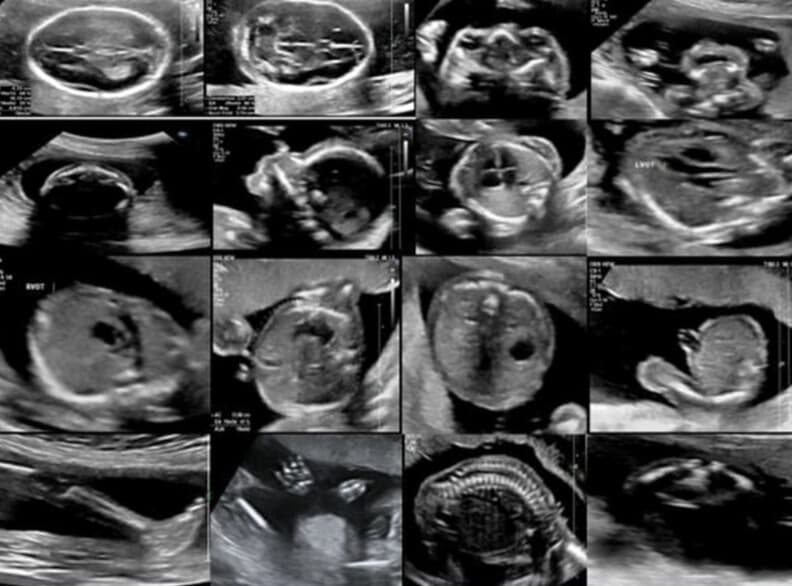
An anomaly scan, also known as a detailed fetal ultrasound or level 2 ultrasound, is a comprehensive examination of your baby's development at 18-22 weeks of pregnancy. This scan provides detailed information about your baby's growth, development, and any potential structural abnormalities.
What We Check
- Baby's growth and measurements
- Brain and spine development
- Heart structure and function
- Internal organs development
- Limbs and facial features
Important Information
Best Time for Anomaly Scan
The optimal time for an anomaly scan is between 18-22 weeks of pregnancy. During this period, the baby's structures are well-developed and visible, allowing for a thorough examination of all organs and systems. During the 20-week scan, heart abnormalities like holes larger than 5mm or any malformation in the arteries can be clearly seen.
What the Scan Detects
- Structural abnormalities in major organs
- Growth and development issues
- Placental position and function
- Amniotic fluid levels
- Baby's head, neck, spine, arms, and legs
- Heart chambers and blood flow
- Cleft lip and palate
Limitations
While the anomaly scan is highly accurate, it has some limitations:
- Cannot detect 100% of structural abnormalities
- Some conditions may develop after the scan
- Image quality may be affected by maternal factors
- Certain abnormalities like soft tissue fusion of fingers/toes may not be recognizable
- Deep cleft lip inside the mouth can be challenging to diagnose
- Heart holes smaller than 5mm are difficult to detect
- Obesity can affect image quality and diagnostic ability
The Scan Process
Preparation
Come with a moderately full bladder. Wear comfortable, loose-fitting clothing. Avoid applying oil or lotion to your belly.
The Scan
A detailed ultrasound examination lasting about 30-45 minutes, performed by our expert sonographers. A water-based gel is applied to your abdomen for smooth probe movement.
Results
Immediate feedback from our specialists, with detailed report and images provided. If any abnormalities are detected, further evaluation and genetic counseling may be recommended.
What to Expect
During the Scan
- Comfortable, private scanning room
- High-definition ultrasound equipment
- Real-time viewing of your baby
- Detailed explanation throughout
- Partner or family member can accompany you
After the Scan
- Comprehensive written report
- Printed ultrasound images
- Digital copies of images
- Follow-up consultation if needed
- Genetic counseling if abnormalities are detected
MYTHS OR FACTS
Myth:
Congenital anomaly scans can be done at any time during pregnancy.
Fact:
The recommended timing for anomaly scans is usually between the 18th and 22nd weeks, as this is when the fetal structures are more clearly visible.
Myth:
Only women over a certain age need anomaly scans.
Fact:
Age is one factor, but anomalies can occur at any age. Anomaly scans are recommended for all pregnant individuals, not solely based on age.
Myth:
Congenital anomaly scans are only necessary for high-risk pregnancies.
Fact:
Congenital anomaly scans are recommended for all pregnancies, regardless of perceived risk, as they help assess the baby's health and identify potential issues early on.
Myth:
The scan can detect all possible congenital anomalies.
Fact:
While the scan is comprehensive, it may not detect every congenital anomaly. Some conditions may become apparent later in pregnancy or after birth.
Myth:
The scan poses risks to the baby.
Fact:
Congenital anomaly scans are considered safe and non-invasive. They use ultrasound technology, which doesn't involve radiation and hasn't been shown to harm the developing fetus.
Myth:
Results are always conclusive.
Fact:
While anomaly scans provide valuable information, they are not definitive diagnostic tools.
Frequently Asked Questions
Is the anomaly scan safe for the baby?
Yes, the anomaly scan is safe for the baby. It utilizes low-intensity ultrasound waves, which don't harm the growing fetus.
Can I eat before the anomaly scan?
Yes, you can eat before the anomaly scan. However, it's recommended to avoid gas-producing foods like broccoli or beans, as they may cause discomfort during the scan.
Will the anomaly scan be painful?
No, anomaly scans are not painful. The procedure is completely non-invasive and comfortable.
Can the anomaly scan detect Down syndrome?
An anomaly scan can detect some physical markers associated with Down syndrome, but it can only detect 50-70% of chromosomal abnormalities. For more accurate results, specific screenings like NIPT are recommended.
What if my baby is in an unfavorable position during the scan?
If your baby is in a position that makes it difficult to see certain structures, the sonographer may ask you to take a short break, walk around, or have a sugary drink to encourage the baby to move to a better position.
Do I need to have the anomaly scan twice?
It is not necessary to perform the anomaly scan twice. However, in some cases, your healthcare provider may advise a follow-up scan to observe the development and growth of the fetus, especially if certain structures couldn't be clearly visualized in the first scan.
Schedule Your Anomaly Scan
Book your appointment with our experienced specialists for a comprehensive anomaly scan.